
Cupping therapy is often associated with tight muscles and circular skin marks, but many practitioners and clients approach it with a broader goal: feeling more comfortable, moving more easily, and finding space to relax.
Traditional Chinese Medicine (TCM) describes health through concepts of balance and the movement of Qi and blood. Modern massage practice tends to emphasize tissue responses, client comfort, and changes in symptoms or function. Both perspectives can inform a conversation about cupping, provided we explain where traditional theory ends and scientific evidence begins.
For massage therapists and wellness professionals, that distinction makes the idea of “balance” more useful. It becomes something to explore with the client rather than a promise that a treatment will correct every underlying problem.
What Balance and Flow Mean in Traditional Chinese Medicine
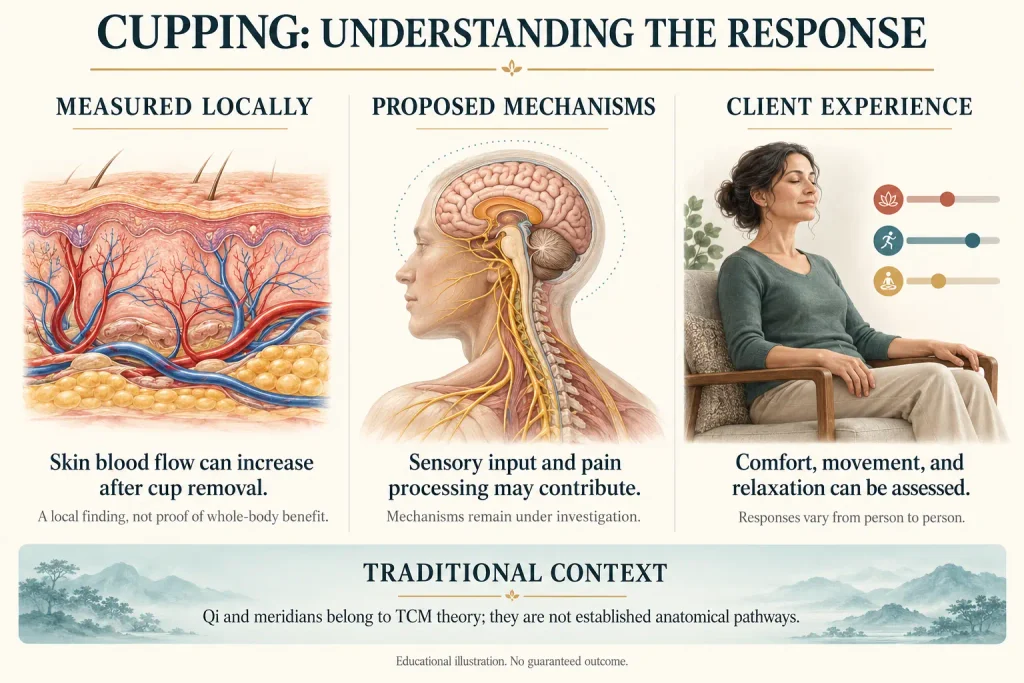
In TCM, Qi is commonly translated as vital energy, and meridians are described as pathways through which it moves. Within this traditional framework, disruptions in the movement of Qi and blood are used to explain patterns of discomfort and disharmony. Cupping is one of the practices traditionally used to address what this system calls stagnation.
These concepts belong to a longstanding medical tradition. They should not be presented as confirmed anatomical structures or measurable blockages equivalent to a narrowed blood vessel. A client’s shoulder pain, fatigue, or digestive symptoms also cannot be assumed to result from obstructed Qi.
A practitioner can respect the traditional explanation while being clear about its status. For example: “In TCM, cupping is described as encouraging the movement of Qi and blood. In a massage session, we can also evaluate how the treatment feels and whether your movement or discomfort changes.”
That explanation gives interested clients context without requiring them to adopt a particular belief system. It also keeps assessment anchored in what the practitioner can observe and what the client reports.
What Suction Does to the Tissues
Cupping therapy uses negative pressure to draw skin and superficial tissue into a cup. Depending on the method, cups may remain in place briefly or move over appropriately lubricated skin. The lifting sensation differs from the compression commonly used in massage.
Small experimental studies have measured increases in local skin blood flow after cups are removed. This finding supports a local physiological response, but it does not establish that cupping improves circulation throughout the body or treats a circulatory disorder.
Other explanations for cupping’s effects include changes in sensory input and pain processing. These remain proposed mechanisms rather than complete explanations of why an individual client feels better. Suction strength, application time, treatment location, and the person’s response all matter.
Claims that cups reliably “break up adhesions” go further than the evidence supports. A client may feel less restricted after treatment, but that experience does not prove that scar tissue or connective tissue adhesions have been physically removed. Practitioners can describe a change in comfort or movement without claiming a structural repair they cannot verify.
Relaxation and the Nervous System: A Careful Explanation
The sympathetic and parasympathetic branches of the autonomic nervous system help regulate functions such as heart rate and digestion. They work together continuously; the body does not simply switch between two exclusive settings.
Stress can affect sleep, muscle tension, and the experience of pain. A comfortable bodywork session may offer an opportunity to rest, and some clients report feeling calmer after cupping. However, feeling relaxed does not demonstrate that cupping has “reset” the nervous system or corrected chronic autonomic dysfunction.
The treatment experience also includes more than suction. Clear communication, comfortable positioning, a predictable pace, and the ability to stop treatment can all shape how a client experiences the session. A practitioner should avoid attributing every change to a single biological mechanism.
In practice, ask about comfort early and throughout treatment. A pulling sensation may be acceptable; sharp pain, burning, or distress calls for stopping and reassessing. Stronger suction is not automatically more therapeutic, especially when the client’s goal is relaxation.
Turn the Idea of Balance Into Practical Goals
“I want to feel balanced” is a meaningful starting point, but it helps to identify what that would look like in daily life. One client may want easier head movement while driving. Another may want their shoulders to feel less tense after computer work.
Before treatment, agree on one or two simple outcomes:
- Comfort: How does the area feel at rest or during a familiar movement?
- Movement: Is there an everyday action the client wants to perform more comfortably?
- Relaxation: Does the client feel able to settle into the session, and what would help?
Revisit those outcomes afterward without steering the client toward a positive answer. Ask what changed, what stayed the same, and whether anything feels irritated. When appropriate, document the response and ask whether any benefit lasted beyond the appointment.
This approach helps practitioners distinguish a pleasant immediate experience from a useful ongoing result. It also gives clinic owners a clearer way to explain the service: individualized bodywork with specific goals and realistic expectations.
Keep the Benefits in Perspective
Research suggests cupping may help with some pain complaints, but limitations in study quality make firm conclusions difficult. Results from one cupping method, body region, or condition should not be generalized to every application.
A 2011 German pilot trial involving 50 adults with chronic nonspecific neck pain found less pain after cupping therapy than with a waiting-list comparison. Its small sample, short follow-up, and lack of a sham treatment limit conclusions about lasting or cupping-specific benefits.
Relaxation and a temporary change in discomfort can still matter to a client. They do not establish that cupping treats digestive disorders, resolves emotional trauma, prevents illness, or improves overall health through energy clearance. Likewise, an emotional response during bodywork does not prove that emotions were stored in the tissues and released by suction.
For practitioners, a whole-person approach means listening to the client’s needs, preferences, and health history. Cupping can be considered alongside appropriate movement, rest, and other care, with referral when symptoms fall outside the practitioner’s scope.
Safety Is Part of a Balanced Approach
Screening should guide whether cupping is appropriate. Avoid applying cups to open wounds or infected or significantly inflamed skin. A suspected blood clot requires medical assessment rather than cupping. Clients taking anticoagulants or living with bleeding disorders need medical guidance before cupping because of bleeding and bruising concerns.
Explain that temporary discoloration can occur and that skin irritation or blistering is possible. Darker marks are not a measure of toxins, stagnation, or treatment success. Follow equipment cleaning and reprocessing instructions and applicable infection-control requirements, obtain informed consent, and adjust treatment to the client’s skin and tolerance.
Persistent, unexplained, or worsening symptoms deserve medical assessment. Cupping should complement appropriate care rather than delay it.
Bring Thoughtful Cupping Into Your Practice
For practitioners, applying these ideas begins with education that connects technique, client assessment, and clear communication. Training can help you make informed choices about cup placement, suction, and treatment goals while recognizing when cupping may be inappropriate.
Explore ACE Massage Cupping training for learning options suited to your experience. Confirm that cupping falls within your professional scope of practice before introducing it into client care.
Get Certified in Cupping Therapy
Take your practice to the next level with a Cupping Therapy Certification. Whether you’re a massage therapist, acupuncturist, or wellness professional, our certification courses provide you with the knowledge and skills to offer safe, effective cupping therapy treatments.
Benefits of Certification:
- Gain credibility and attract more clients
- Learn advanced techniques from industry leaders
- Earn NCBTMB-approved CEUs
Start your certification journey today!
Recommended Online Courses
-
ACE Massage Cupping Bodywork Therapy — Online Course & Certification
Original price was: $120.00.$99.00Current price is: $99.00. -
MediCupping Therapy: VacuTherapies for Healthcare Practitioners — Online Class & Certification
Original price was: $120.00.$99.00Current price is: $99.00. -

Stretching with Cupping — Online Course
$45.00 -
Ultimate Face Lifting and Drainage — Online Course
Original price was: $50.00.$40.00Current price is: $40.00. -

Kinetic Chain Patterns Causing Complicated Knee Conditions — Online Course
$60.00


Give Balance and Flow a Practical Meaning
Balance means something different to each client. One person may hope to move more comfortably; another may value an opportunity to rest during a demanding week. Asking what matters to them gives the session a clear purpose and makes its outcome easier to assess.
Cupping’s place in a thoughtful practice rests on careful technique, honest explanations, and attention to the person receiving care. By respecting its traditional roots while keeping claims grounded in evidence, practitioners can give “balance and flow” a practical meaning that clients can understand.